A few centimeters can change an entire outfit. Where a sleeve ends. Where a hem meets your trousers. How much fabric rests above a sneaker. With an oversized T-shirt, these small relationships give a relaxed look its shape.
The appeal is in the ease: room through the body, a generous sleeve, fabric that moves with you. Styling it well means deciding where that volume continues and where it stops.
At AEROKORA, we see the oversized tee as a starting point for personal style. Here are seven ways to build an outfit around it, with attention to proportion, color, and detail.
Start With the Hem
Before choosing shoes or accessories, look at where your T-shirt ends. Its length determines how much of your trousers remains visible and where the outfit appears to divide.
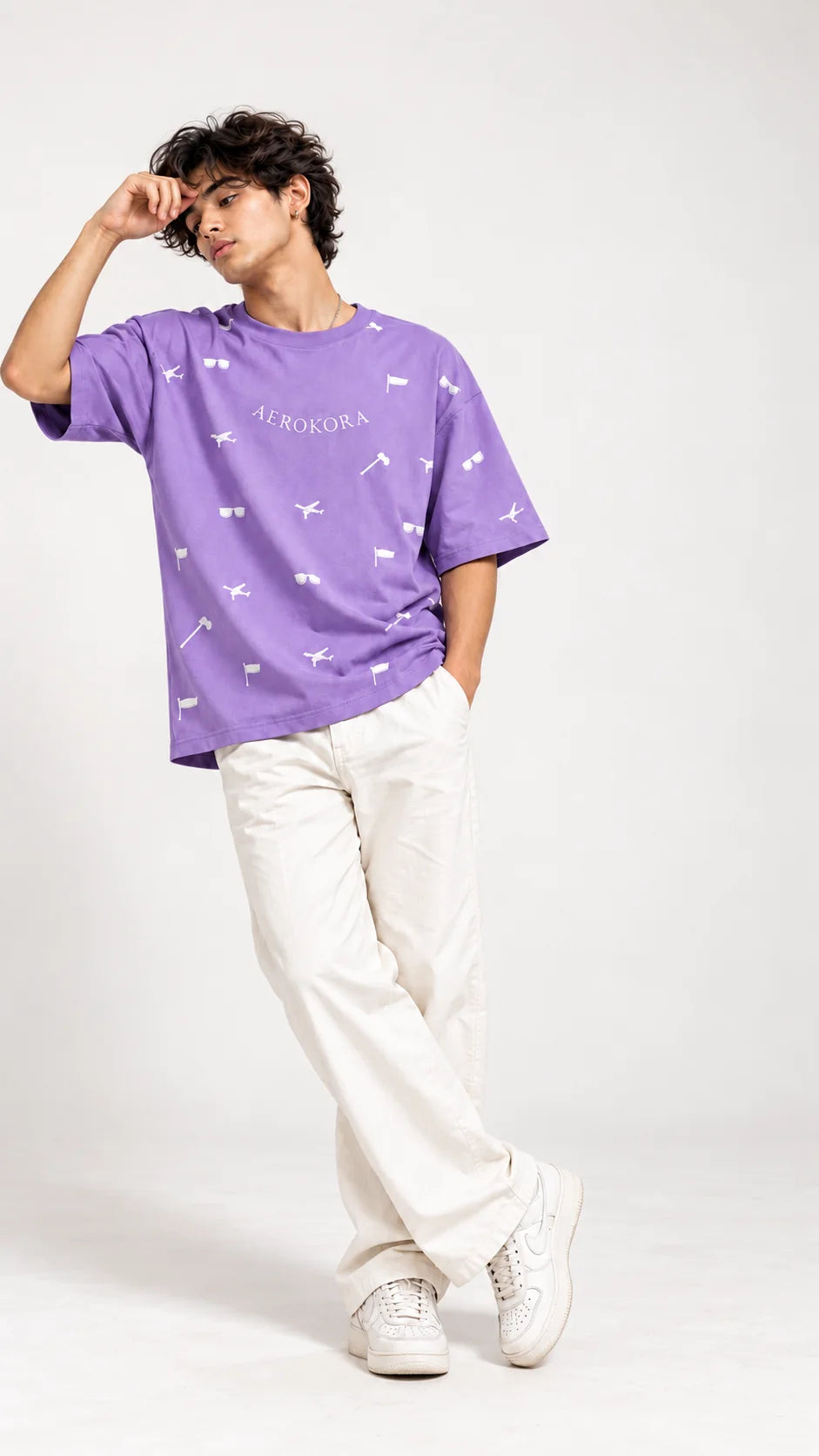
For an easy starting point, try a hem that falls around the upper to middle portion of your fly. A longer tee creates a more elongated upper silhouette; a shorter one reveals more of the leg. Neither is a fixed rule. The useful question is whether you like that balance on your own frame.
Compare the measurements with a tee you already enjoy wearing. An oversized cut already includes extra room, so check the size chart before automatically sizing up.
Give the Volume Somewhere to Go
Straight leg denim is a simple companion to an oversized tee. It carries some width through the lower half without dramatically changing the outline, making it a useful place to begin.
Wide leg trousers create a fuller silhouette from shoulder to shoe. If that is the look you want, pay particular attention to length. A hem that lightly meets the shoe gives a different finish from fabric pooling over it.
Slimmer trousers bring stronger contrast to a broad tee. Try both approaches in a full-length mirror. Judge the complete outline, including the shoes, rather than deciding on each garment separately.
Let Color Connect the Outfit
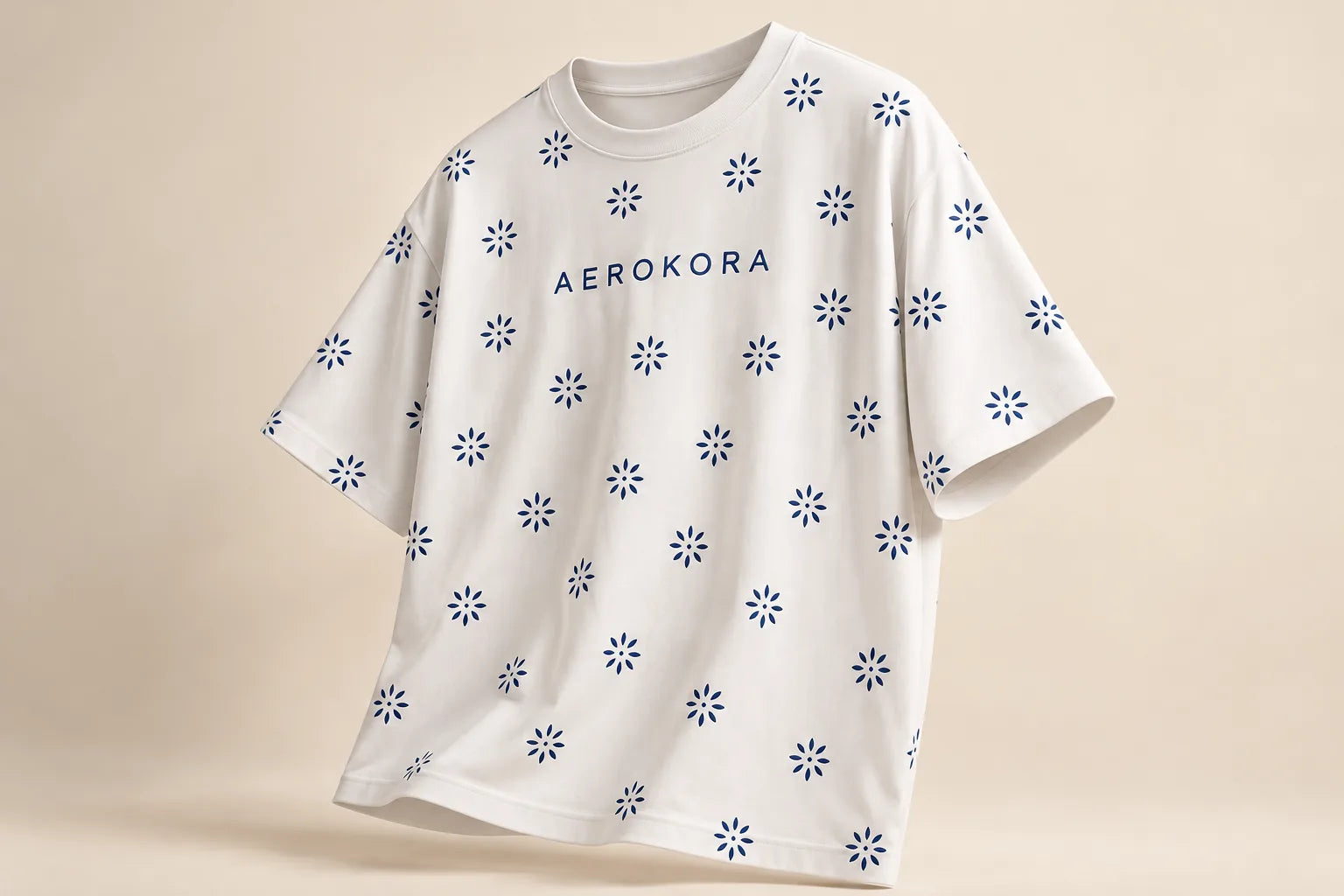
An easy way to make a graphic tee feel considered is to repeat one of its colors elsewhere. A small navy motif can connect with dark indigo denim. An off-white base can pick up the lighter tone of a sneaker.
For example, the off-white and navy combination of Pattern Drift lends itself to dark blue jeans and simple cream footwear. The repeating colors give the artwork a place within the outfit.
Keep the starting palette to two or three main colors if you want a restrained result. Once the proportions work, an additional accent can come through a cap, bag, or pair of shoes.
Choose Shoes With the Trouser Hem in Mind
Footwear completes the shape at ground level. A low-profile sneaker leaves a clean finish beneath straight trousers. A fuller shoe can hold its own beneath a wider leg.
Put the shoes on before judging trouser length. Notice whether the hem falls naturally, catches behind the heel, or hides more of the shoe than you intended. A small cuff or a different trouser length may be enough to change the balance.
For a more dressed-up interpretation, try relaxed trousers with loafers. Keep the tee untucked for ease, or experiment with a loose tuck if you want to show the waistband and give the outfit a clearer waistline.
Make Room for the Artwork
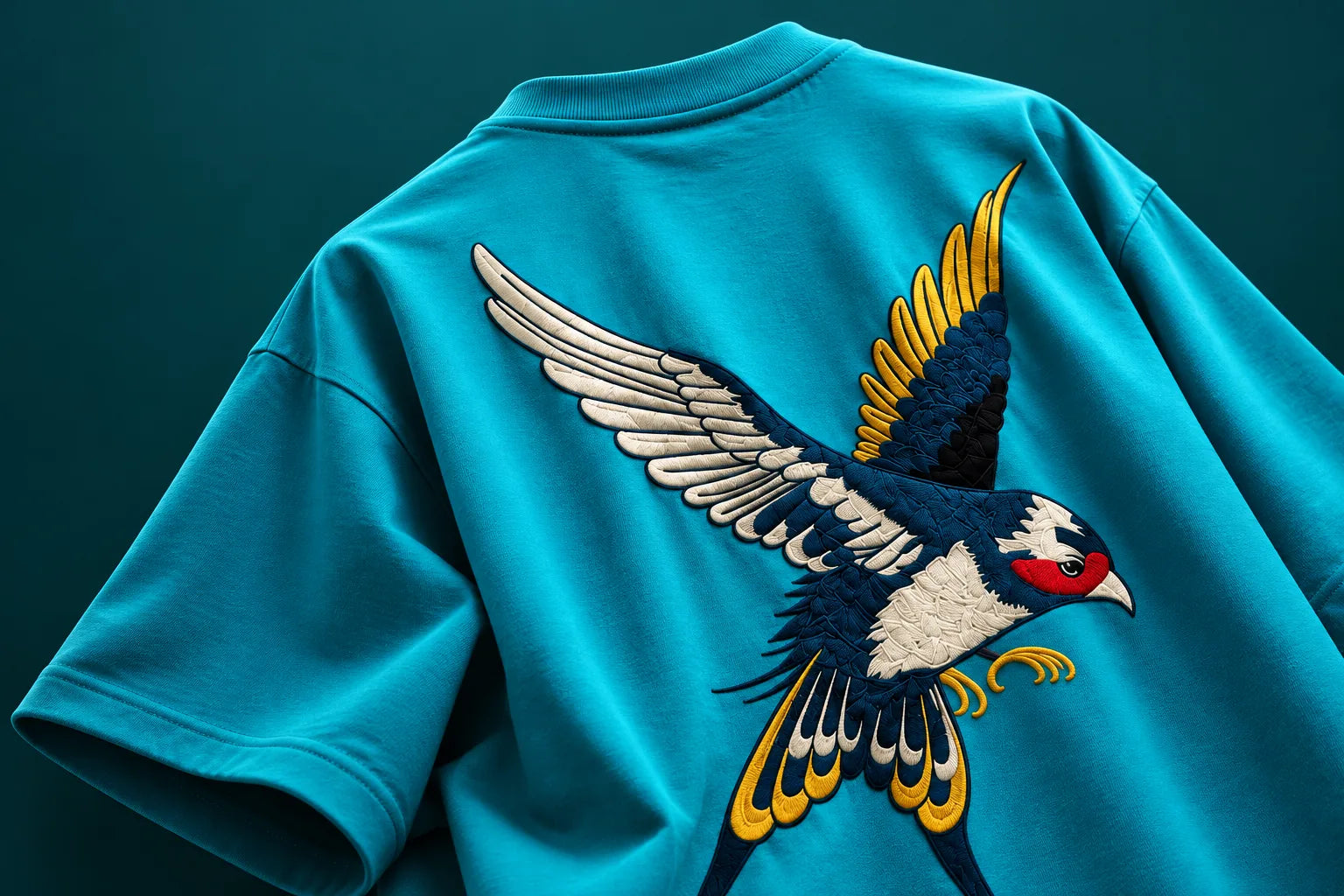
Consider where the design sits before adding another layer. A jacket may frame a chest graphic beautifully while covering the artwork on the back.
With a tee such as Rising Mark, the embroidered bird across the back can carry the look on its own. Plain trousers give that detail space, especially when the tee is worn without outerwear.
When layering, choose a jacket or overshirt with enough room through the shoulders and sleeves. Check that the tee sits comfortably underneath and that its hem shows by an amount you actually like.
Use Shorts to Change the Balance
Shorts introduce a visible break beneath an oversized tee. A relaxed pair ending above the knee is one starting point, particularly when enough of the shorts remains visible below the shirt.
Longer shorts create a different, more expansive silhouette. If both garments are generous, look at the relationship between their hems. A tee that nearly covers the shorts can make the lower half disappear.
Try a shorter tee length or a loose front tuck if you want more definition. Keep any tuck clear of artwork you want to show.
Finish With One Deliberate Detail
Once the silhouette and colors feel right, choose an accessory that adds something specific. A watch can give the outfit a polished finish. A textured bag introduces another material. A cap can repeat a color already present in the design.
Start with one, then decide whether the outfit needs more. With embroidery or raised artwork, there is already detail in the garment itself.
Finally, move around. Sit down, take a few steps, and check how the fabric settles. The proportions should feel as comfortable in motion as they look in the mirror.
Find Your Own Balance
Try an oversized tee with straight denim and low-profile sneakers for an everyday starting point. Swap the denim for relaxed trousers and loafers for an evening out. On a warmer day, use plain shorts and let the artwork lead.
Each combination begins with the same garment. Its character changes through the lengths, shapes, and colors around it.
That is the art of proportion: knowing how a small adjustment can make an outfit feel entirely your own.